

Workwear embroidery guide · Est. 1994 · Dock Road, Limerick
Embroidery is the finish most Irish companies choose for their staff workwear, and for good reason. A stitched logo looks permanent, survives daily washing and makes a team look like a team. But not all embroidery is equal. The difference between a logo that looks sharp for years and one that puckers after a month comes down to how it is digitised, stitched and finished.
This guide covers what good workwear embroidery looks like, which garments suit it, and how the process works from logo file to finished uniform at our Limerick workshop.
Why embroidery is the standard for workwear
It lasts. Thread is stitched into the fabric, so it does not crack, peel or fade the way a print can after a season of hot washes. A well made logo will usually outlive the garment it is on.
It looks professional. Embroidery has depth and texture. On a polo, softshell or fleece it reads as considered and corporate rather than promotional.
It suits workwear fabrics. Polos, fleeces, softshells and heavier cottons are stable fabrics that hold stitching cleanly, which is exactly what most staff kit is made from.
Inside the workshop
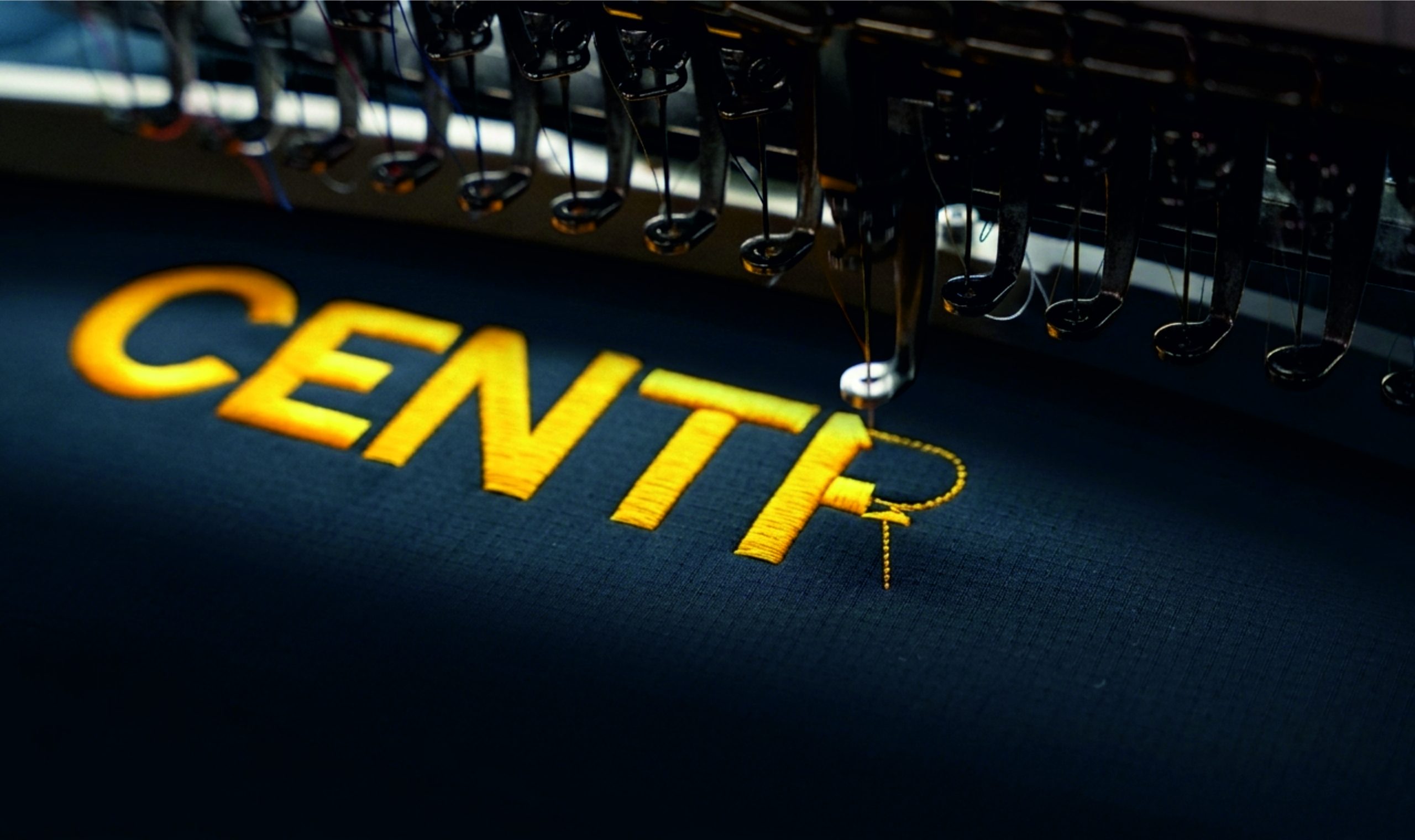
Watch a logo stitched in Limerick
Digitising, embroidery, trimming and checks, all on Dock Road. See our workwear embroidery service
From logo file to finished garment
Every stage below happens in our own workshop. Keeping the whole job under one roof is what lets us control how your logo looks on the first garment and the five hundredth.
Digitised for the fabric
Your logo is mapped stitch by stitch, with density, underlay and direction set for the garment it is going on.
Sewn as a sample
We stitch your logo on the actual garment and send you a photo. You approve thread, not a flat mockup.
Stitched in Limerick
Production runs on our own machines, operated by the team that sewed your sample.
Trimmed and checked
Every garment is trimmed and inspected by hand, then your file and thread colours are saved for next time.
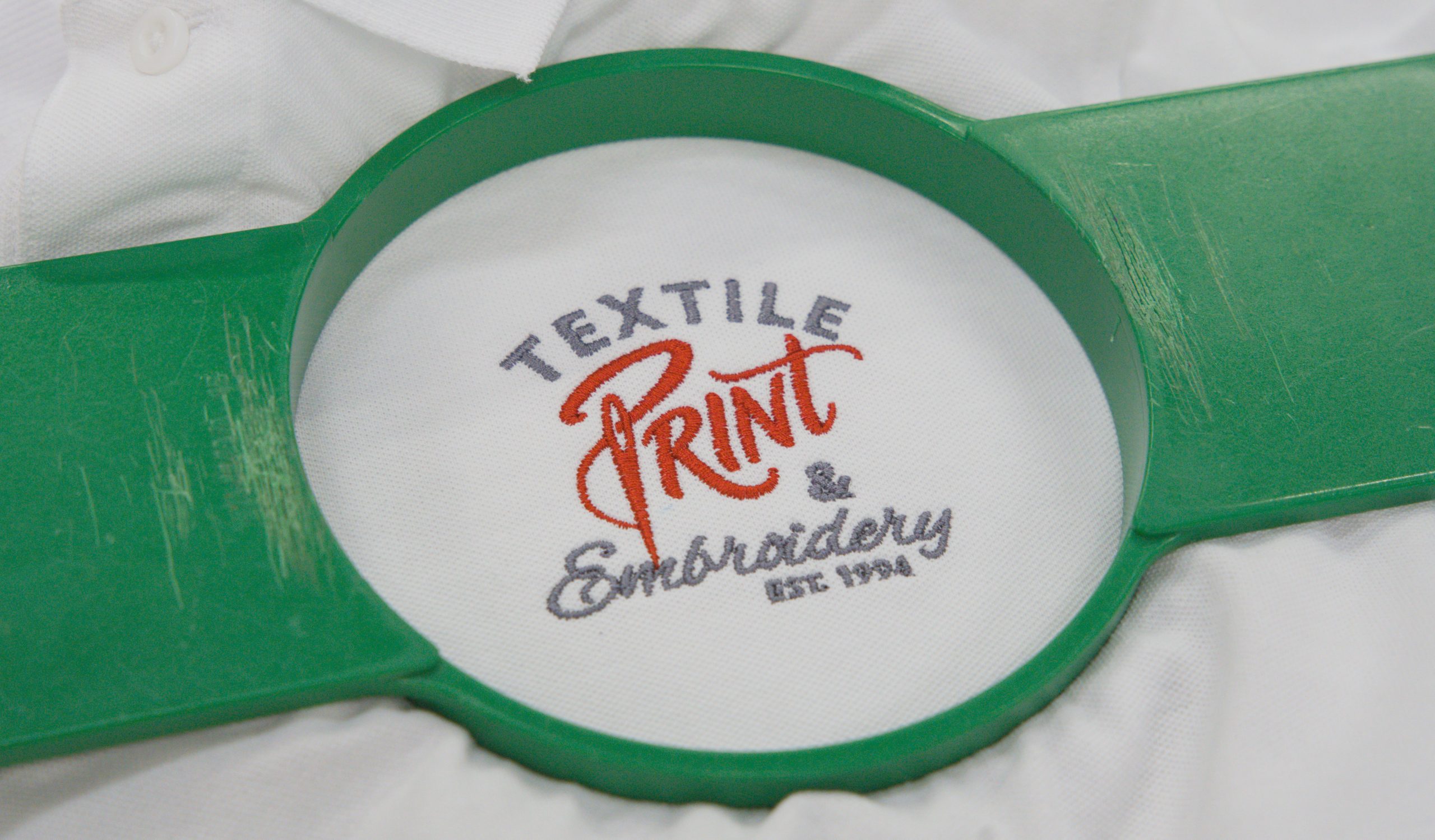
What crisp embroidery looks like
Most people can spot bad embroidery but cannot say why. These are the points we check on every garment, and what you should look for on any embroidered workwear.
- Clean satin edgesBorders are smooth and even, with no jagged steps or fabric showing at the edge.
- Readable small textLetters are sharp, with clear gaps inside an “a”, “e” or “o”. Small text is where weak digitising shows first.
- Outlines that line upBorders sit exactly on the fill. A gap means the fabric shifted while it was stitched.
- Flat fabricNo rippling or puckering around the logo. That comes from the right backing and density for the garment.
- Solid coverageFilled areas are full colour with no garment peeking through, thanks to proper underlay.
- Tidy finishNo loose threads or jump stitches between letters, and backing neatly trimmed inside.
Which workwear garments suit embroidery
Polo shirts
The everyday uniform. A left chest logo, often with a name or role underneath.
Softshells and jackets
Backing chosen per fabric so the logo sits square and the shell stays intact.
Hoodies and fleeces
Warehouse, yard and early shifts. Thread holds where print wears out.
Shirts and knitwear
Office and management kit, with a finer logo stitched at a tighter density.
Caps and beanies
Front logos stitched crisp on structured caps and knitted beanies for outdoor teams.
Hi vis and PPE
Logos sized and placed so certified fluorescent and reflective areas stay intact.
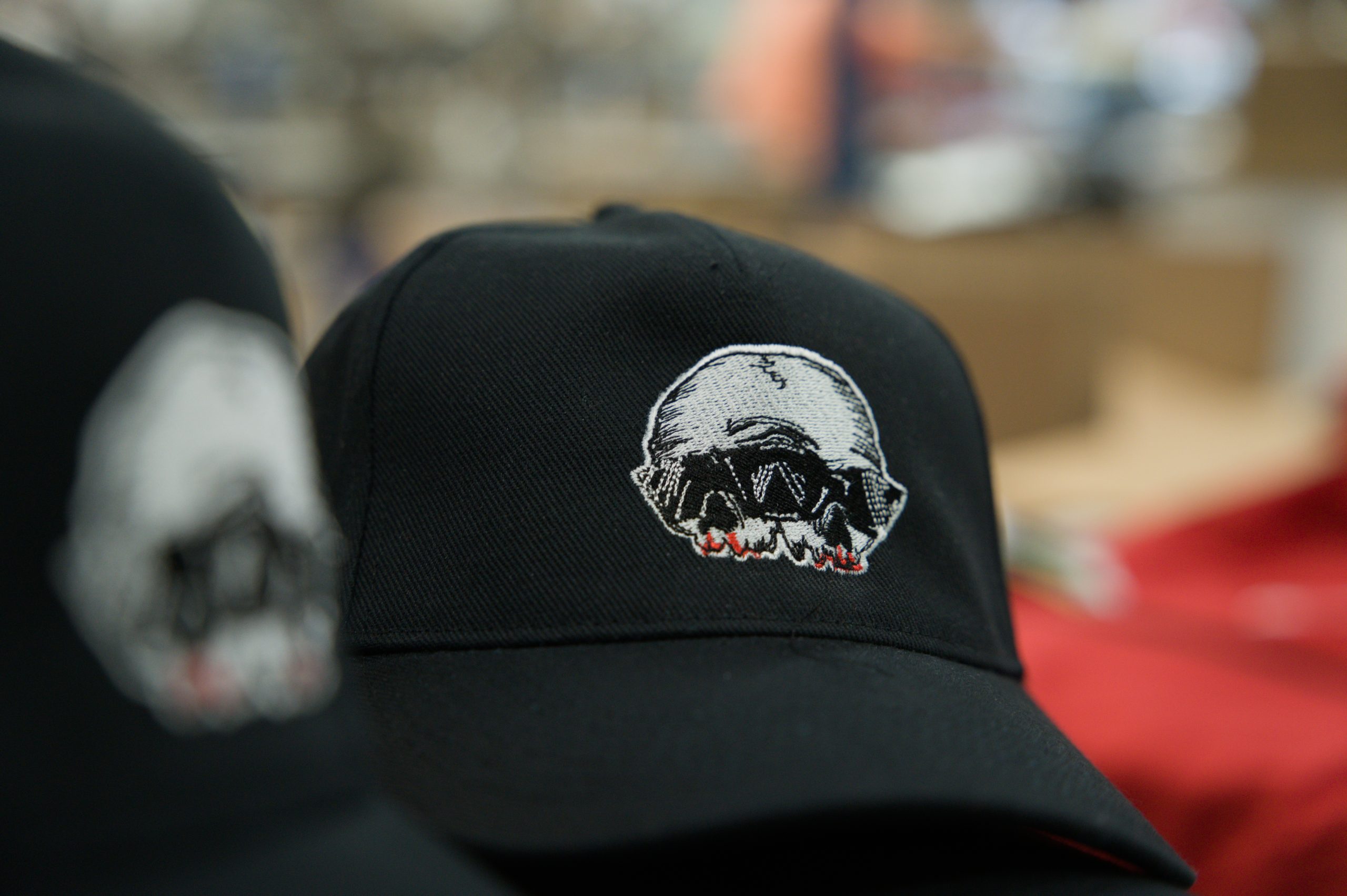
Where to place the logo
Left chest is the default for good reason. It reads as corporate, works under a hi vis vest and suits almost every garment. A sleeve logo is a strong second position. A back logo is for visibility on site rather than subtlety. Names and job titles under the chest logo are standard for front of house, healthcare and site management teams.
How to brief your workwear embroidery
Send us the garments you want, quantities and size split, logo positions and your deadline, plus the best logo file you have. A vector file (AI, EPS or PDF) is ideal, but we redraw plenty of logos taken from websites. Standard turnaround is two to three weeks from approval, and five to ten working days on repeat orders once your logo is on file.
Questions we get asked
Workwear embroidery FAQs
What is digitising and why does it matter?
Digitising turns your logo into a stitch file the machine follows, setting stitch type, direction, density and underlay. It decides how sharp, flat and durable the finished logo is, so it is done in house for the specific fabric.
Will reorders match my original workwear?
Yes. Your stitch file and thread colours are held at our Limerick workshop, so every reorder runs from the same file and new starters match the rest of the team.
Do I see a sample before production?
Yes. We sew your logo on the actual garment and send you a photo to approve. Nothing runs until you sign it off.
Can you match our brand colours?
Yes. Thread is matched to your brand colours at digitising stage and the palette is stored with your file.
What is the minimum order?
We embroider from 10 garments. Once your logo is on file there is no real minimum, which makes new starter packs simple.
Ready when you are
Your logo, stitched properly.
Send us your logo and we will digitise it and sew a sample on the garment you have in mind. Family run in Limerick since 1994, delivered nationwide.
Leave a Reply